Introducing The Big Book of Large Language Models!
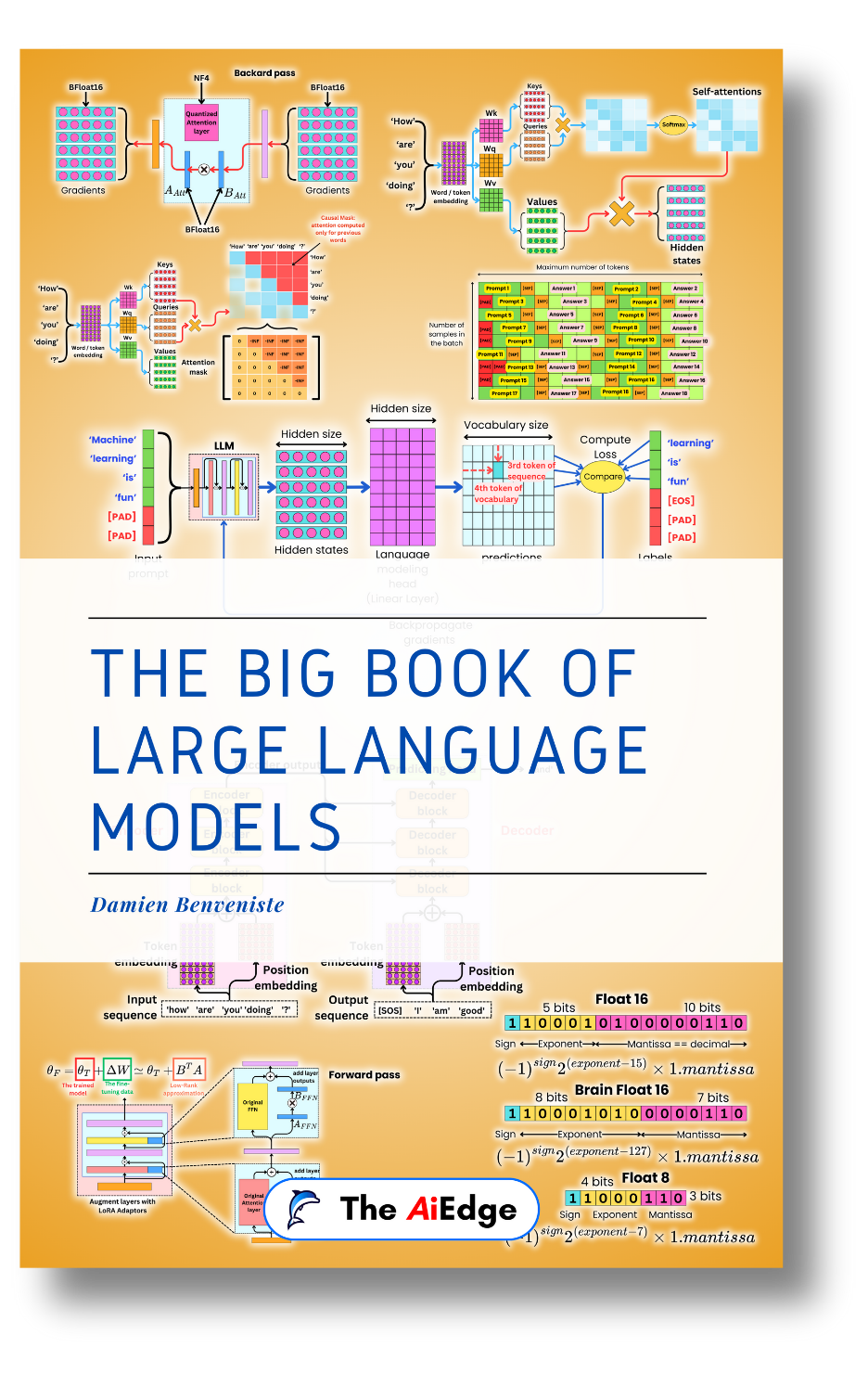
For the past years, I have been creating educational content around machine learning and, specifically, large language models. I have been acquiring a depth of knowledge through my experience and practice in the field, and I want to share it with everybody! I started the process of writing, I...
For the past years, I have been creating educational content around machine learning and, specifically, large language models. I have been acquiring a depth of knowledge through my experience and practice in the field, and I want to share it with everybody! I started the process of writing, I believe, one of the most complete books on the subject of Large Language Models. You can access the book website here: The Big Book Of Large Language Models.I will make the chapters available little by little as I write them. Don’t hesitate to leave comments so I can improve the current draft! The first chapter is now available: Language Models Before Transformers. In that chapter, I address the following subjects:The Embedding LayersWord2VecGloVeThe Jordan NetworkThe Elman NetworkThe Vanishing and Exploding Gradients ProblemLong Short Term Memory (LSTM)Gated Recurrent Unit (GRU)Sequence-to-Sequence ModelsThe RNN Encoder-Decoder ArchitectureThe Bahdanau Attention MechanismThe Luong AttentionHere are the chapters coming up:IntroductionLanguage Models Before TransformersAttention Is All You Need: The Original Transformer ArchitectureA More Modern Approach To The Transformer ArchitectureMulti-modal Large Language ModelsTransformers Beyond Language ModelsNon-Transformer Language ModelsHow LLMs Generate TextFrom Words To TokensTraining LLMs to Follow InstructionsScaling Model TrainingFine-Tuning LLMsDeploying LLMsMy philosophy is to provide the depth of the mathematic notation along with the ease of visual illustrations of the different concepts. I believe the book can be read at different levels: For somebody looking for the finest details, the equations should provide the foundations to understand thoroughly the concepts. For somebody looking for a simpler read, the equation can be ignored to focus on the textual and visual explanations. For somebody looking to strengthen their mathematical fundamentals in ML, the connection between the math and the visuals should help bridge the difficulties usually encountered when learning mathematics. Let me know if you think the book is missing the target on that “mission.” I am truly excited to share this with you! I hope you will enjoy reading it as much as I enjoy writing it!Source: The AI Edge — Published — Category: Research