The Ultimate Guide to FLUX 3
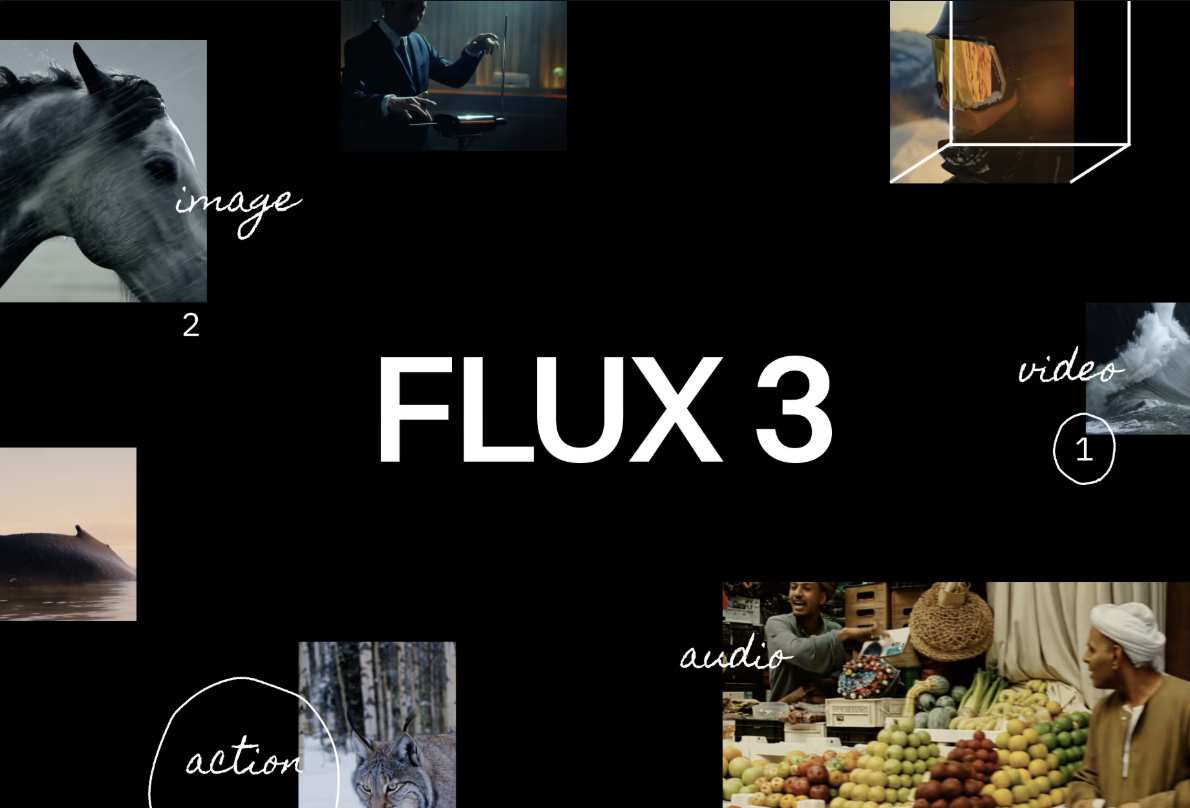
Replicate Blog The Ultimate Guide to FLUX 3 Posted August 4, 2026 by shridharathi Try FLUX 3 on ReplicateRun FLUX 3 Black Forest Labs made history when they released their FLUX.1 image model. They were one of the first independent research labs to pioneer fast, high-quality, open source image…
Replicate Blog The Ultimate Guide to FLUX 3 Posted August 4, 2026 by shridharathi Try FLUX 3 on ReplicateRun FLUX 3 Black Forest Labs made history when they released their FLUX.1 image model. They were one of the first independent research labs to pioneer fast, high-quality, open source image generation. Now, they are taking a swing at video, and we are intrigued. FLUX 3 is the lab’s new multimodal foundation model. Compared to other labs, they are taking a new approach. BFL has developed a model with a consolidated architecture, learning from images, audio, and video to generate multimodal outputs. Taken straight from their release blog: “Images capture spatial structures and relationships at a specific point in time. Videos restore the dimension of time and reveal temporal dynamics and physical laws. Audio reveals causal relationships between mechanical phenomena and acoustics that vision alone cannot detect. Language links these perceptions to goals, abstractions, and instructions. Learn from one and you get a good model of that projection. Learn from all of them at once and their mutual constraints tell you more: the sound has to match the impact, the motion has to obey the mass, the future has to follow from the past. The modalities stop being separate and start being evidence about one underlying reality.” Seemingly, this training approach means that this model has more laws of physics baked in. Audio informs motion and vice versa. Video introduces temporality to images which already encode spatial relationships. FLUX 3 is an attempt at creating a net of weights that better encapsulates reality. This post walks through some things FLUX 3 is best at, with real examples for each. Text to video FLUX 3 doesn’t need much to work with. Feed it a plain sentence or a dense, specific one, and it holds up either way. That includes things that require actually knowing how something works, not just what it looks like. A desert off-road trophy truck racing across open dunes at full speed, kicking up a huge rooster tail of sand and dust behind it, suspension soaking up jumps as it crests a ridge and goes briefly airborne. Camera tracks alongside at high speed, low to the ground. Hyper-realistic, 8k, harsh midday desert light, the roar of the engine and the crunch of sand under tires. Cinematic underwater wildlife video of a large octopus slowly crawling across a dark rocky seafloor. Low, close tracking angle at eye level, showing its textured mantle, expressive eyes, and eight arms moving independently across wet stone. Suction cups attach and release naturally as the arms pull the body forward; subtle skin ripples and realistic muscular motion. Deep teal water, drifting particles, soft shafts of filtered light, muted rust-red and brown octopus coloration, highly detailed photorealistic skin texture, shallow depth of field, natural documentary cinematography. I like that FLUX 3 doesn’t necessarily need your prompts to be dense or overwrought with details or keywords. Sometimes, you can offload the details of motion and aesthetics to the model itself, and you’ll probably end up with a satisfying result. A young man staring out the window of a train rumbling along in rural Switzerland, beautiful mountains in the background whooshing by. Handheld camera feel, film shot. A diver descends through crystal-clear turquoise water into a jungle cenote, sunbeams piercing down from the opening far above. Beneath the surface, the walls of a submerged Mayan temple come into view, ancient glyphs carved into the stone, fallen pillars scattered across the floor. Fish dart through the ruins as the diver’s flashlight beam sweeps across the carvings. Hyper-realistic, 8k, National Geographic underwater cinematography, muffled bubbles and the diver’s steady breathing. You’ll notice that FLUX 3 will default to multiple cuts of scenes unless otherwise specified. A high-speed motorcycle chase through a rain-soaked underground parking garage at night. The rider leans hard through tight turns, headlights strobing past concrete pillars, tires screeching on wet pavement. Sparks fly as the bike clips a support beam and rights itself. Camera cuts between a low chase angle and a handlebar POV. Hyper-realistic, 8k, neon-lit puddles reflecting the headlights, screaming engine and echoing tires. A hiker moves through a dense Costa Rican rainforest canopy, shafts of golden light breaking through layers of green leaves. A toucan takes flight overhead, a sloth hangs motionless in the branches above, and mist rises off the forest floor. The camera follows from behind at a steady walking pace, then rises to a wide canopy shot. Hyper-realistic, 8k, lush biodiversity, howler monkey calls echoing in the distance and leaves rustling underfoot. Image to video FLUX 3 can use a start frame and an end frame to guide a transformation. A useful test is to keep the same car and scene while changing its condition from abandoned to roadworthy. Start and end frame. Give it two images and describe the physical change you want to see between them. StartEnd Single continuous shot of the same rusted junkyard car transforming naturally into the restored red car. Keep the exact same vehicle identity, camera angle, wheelbase, body shape, and background throughout. Rust flakes dissolve into clean red paint, dents slowly pull themselves smooth, the cracked windshield becomes clear, missing trim reappears, flat tires inflate, and weeds pull back from around the tires. Metal panels reform in place with continuous physical motion. The car then starts and drives forward onto the highway. No cuts, no teleporting, no sudden jumps, no change of vehicle identity, realistic mechanical transformation, documentary camera, natural light. Video continuation The start_video input is a new parameter. You give FLUX 3 an existing clip and it keeps going from the final frame. It preserves the same momentum, framing logic, and audio. It is surprisingly fluid. Base clip: A skateboarder rolls down a sunlit street and approaches a quarter-pipe ramp at the end of a skatepark, picking up speed, wheels clicking over pavement cracks. Continuation: The skateboarder launches off the ramp, catching air, grabbing the board mid-flight, then lands cleanly and rolls away, wheels landing hard on the ramp’s transition. Same idea, a different sport: Base clip: A surfer paddles out through rolling waves at sunrise, ocean spray catching the early light, paddling steadily toward the horizon. Continuation: The surfer spins around, paddles hard to catch a rising wave, pops up to their feet, and rides the wave’s face as it curls behind them. Multiple scenes and camera angles You can write timestamped shots directly into a single prompt. FLUX 3 will cut between them in one generation, so no stitching is required. Copy [0-4s]: wide establishing shot, static camera, description of the scene [4-9s]: hard cut to close-up, next beat of the action [9-14s]: hard cut to a wide shot, final beat [0-4s]: Wide shot of a packed stadium crowd roaring, floodlights blazing against the night sky. [4-8s]: Cut to a close-up on a sprinter’s feet exploding out of the starting blocks, dust kicking up. [8-12s]: Cut to a tracking shot alongside the sprinter crossing the finish line, chest forward, crowd erupting. Hyper-realistic, 8k, Olympic broadcast cinematography, deafening crowd noise and pounding footsteps. A style for everything FLUX 3 isn’t locked into the same hyper-realistic cinematic default a lot of video models default to. It’ll go fully stylized if you ask. Stop-motion claymation style. A small clay character with visible fingerprint textures and thumbprint eyes walks through a miniature clay village, past crooked clay houses with chimney smoke made of cotton wisps, wobbling slightly with each handmade step. Charming stop-motion aesthetic, visible seams and tool marks, warm miniature set lighting, soft foley footsteps. Details really hold up. Do you see the fingerprint markings on the figure? A character sprints through a comic-inked cityscape rendered in a hybrid hand-drawn and 3D CGI style, halftone dot shading across the buildings, bold ink outlines on the character, occasional chromatic-aberration glitch frames splitting the color channels for a beat before snapping back, dynamic Dutch-angle camera work. Into the Spider-Verse aesthetic, comic panel energy, bass-driven hip-hop beat. Fun stuff Quite a few people discovered FLUX 3 can make VHS footage. To get there, describe the recording itself: the camcorder, the bad exposure, the autofocus, the shaky framing, and the sense that the person filming had no idea what they were about to capture. Raw 1997 consumer camcorder home video on a suburban street at night. The camera operator runs behind a group of teenagers, pointed at the pavement at first, then whips up toward the sky as everyone stops and shouts. A huge disk-shaped UFO silently crosses from one horizon to the other above the rooftops, its lights washing over parked cars and house windows. The camera follows the entire flight in one continuous unbroken take until the UFO disappears behind the trees. Cheap handheld camcorder, soft focus, autofocus hunting, blown porch lights, smeared highlights, analog tracking noise, interlaced VHS transfer, muffled voices and footsteps, no edits, no music, no cinematic polish. Raw 1995 home video from a family camping trip beside a lake at night. The camera starts on a campfire and slowly pans to the black water; a second moon rises out of the lake and hangs just above the far shore, its reflection stretching toward the camera. Everyone runs to the water and the camera shakes, the flashlight blows out the foreground, then the moon folds back into the lake and vanishes. One continuous take on a cheap Hi8 camcorder, soft focus, autofocus hunting, interlaced VHS transfer, analog noise, muffled voices, imperfect exposure, no edits, no music, no cinematic polish. Home videos are fun, but these examples from fofr are also compelling. They really stress-test the imagination of the model. Zero-G version> an amateur handheld recording of a very fast zero-g movement through a zero-g space habitat, through room after room after room, non stop, never ending rooms are all completely different to each other and strange, keeps moving, never stopping https://t.co/0tg6r0Sxls pic.twitter.com/EettFRXu8m— fofr (@fofrAI) August 1, 2026 Running FLUX 3 Here’s how to generate a video with FLUX 3: Copy import Replicate from "replicate"; const replicate = new Replicate(); const output = await replicate.run( "black-forest-labs/flux-3", { input: { prompt: "A diver descends through crystal-clear turquoise water into a jungle cenote, sunbeams piercing down from the opening far above. Ancient glyphs carved into submerged temple walls, fish darting through fallen pillars. Hyper-realistic, 8k.", duration: "8", resolution: "720p", aspect_ratio: "16:9", generate_audio: true, // image: "https://...", // start frame for image-to-video // end_image: "https://...", // morph target, requires a whole-number duration // keyframe_images: ["https://...", "https://..."], // up to 10, storyboard mode // start_video: "https://...", // continue an existing clip } } ); console.log(output); On Cloudflare AI Gateway If you want to run FLUX 3 on the fastest AI gateway, use this call: Copy const response = await env.AI.run( 'black-forest-labs/flux-3', { prompt: 'A diver descends through a crystal-clear cenote, sunbeams piercing down from the opening far above, ancient temple ruins beneath the surface, fish moving through fallen pillars.', duration: '8', resolution: '720p', aspect_ratio: '16:9', generate_audio: true, }, ) console.log(response) Requests through AI Gateway can use logging, caching, rate limiting, and tons of other gateway features. FLUX 3 is a third-party model, so Cloudflare handles the provider credentials and bills usage through Unified Billing. You do not need a Black Forest Labs API key. Prompting tips Describe the audio, not just the picture. FLUX 3 generates sound in the same pass as the video. Telling it what things sound like, such as “the shriek of tearing metal” or “the low buzz of the neon transformer,” actually changes the output, not just the visual. Use timestamps for anything with more than one beat. [0-4s]: ... style prompting gives the model explicit cut points instead of leaving pacing up to chance. Match your duration to your morph. If you’re using image and end_image together, duration needs to be a whole number, not auto. Lead with the camera, not just the subject. “The camera tracks alongside at bumper height” or “hard cut to a low angle” gives FLUX 3 something concrete to hold onto. Don’t over-plan image-to-video. A single start frame and one sentence about what happens next is usually enough. The model fills in the physics. Try FLUX 3Try FLUX 3 Next: Krea 2 is your model for aestheticsSource: Replicate — Published — Category: Open Source