🔮 Will Kimi K3 change the economics of AI?
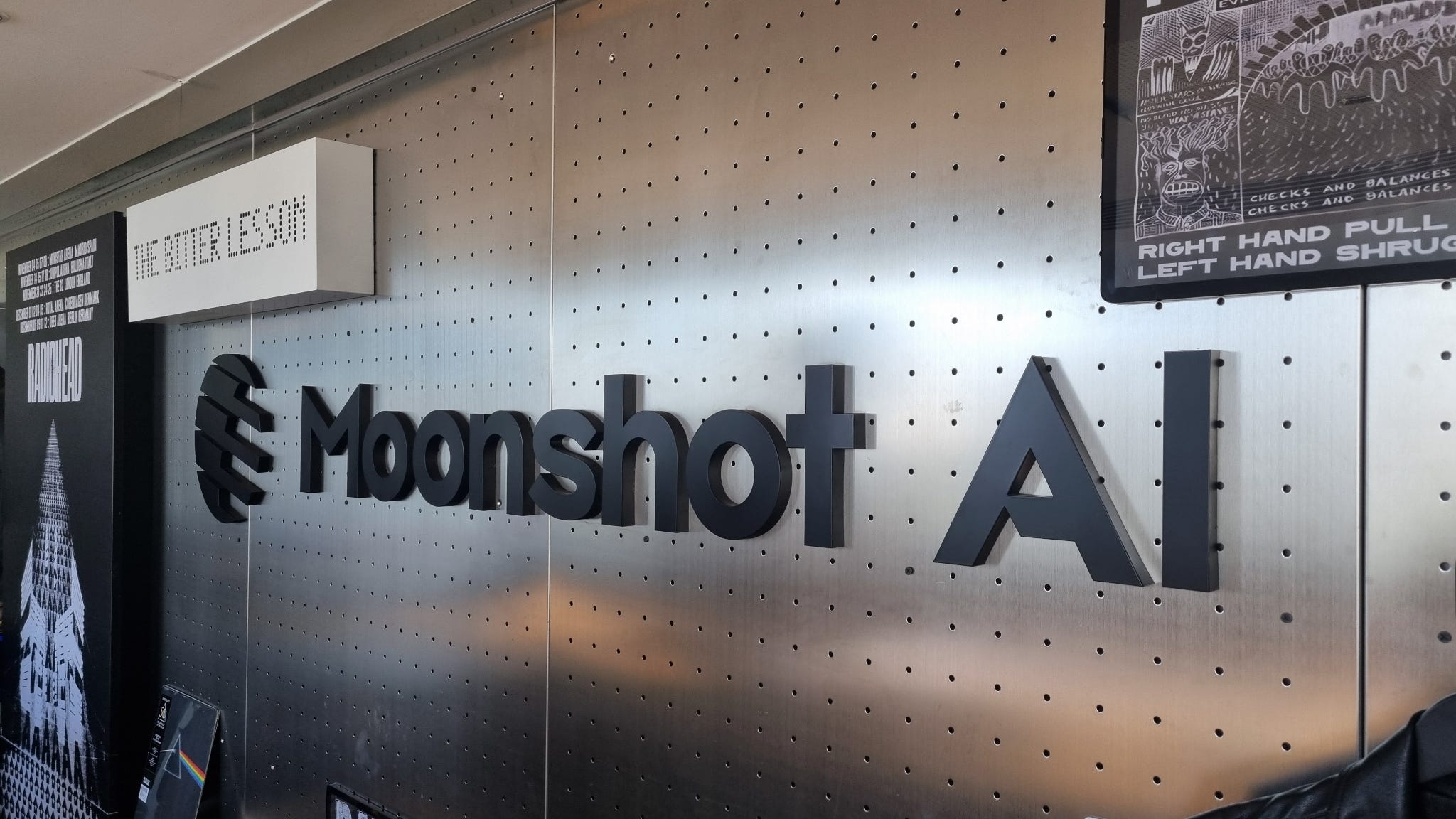
From our visit to Moonshot AI’s office earlier this yearKimi K3 has caused quite an uproar since its release last week. It’s the first time a Chinese model has taken the lead on the frontend Code Arena benchmark. And that’s three months since Moonshot AI’s previous impressive flagship model, Kimi…
From our visit to Moonshot AI’s office earlier this yearKimi K3 has caused quite an uproar since its release last week. It’s the first time a Chinese model has taken the lead on the frontend Code Arena benchmark. And that’s three months since Moonshot AI’s previous impressive flagship model, Kimi K2.6, was released. Following in Moonshot’s steps, Alibaba announced over the weekend that Qwen3.8 – a 2.4 trillion-parameter model – is coming soon, and unlike its last release, this one will be an open-weight model. No benchmarks or further details have been released as of yet.Open models are now estimated to be 4-7 months behind the frontier in cyber capabilities, down from 6-10 months in 2025. And despite compute constraints, efficiency improvements mean these labs are doing more with less. Comparing the compute availability and model performance between US labs and Chinese labs, we estimated Chinese labs to be getting 4-7x more out of their compute. and I spent some time with the Moonshot AI and Alibaba teams in China back in April and May, and we’ve had time to think about the economics of open-source models and how they affect the entire ecosystem.Does Kimi K3 break the economic case for AI?Some have claimed that Kimi K3’s performance breaks the economic case for AI as it lowers the cost to complete various tasks at frontier standards. For instance, Microsoft engineers are reportedly testing whether Kimi K3 can be used within Copilot.We don’t think this is the case, and in today’s post we’ll work through what might happen next. In The State of the AI Economy report, we found that token usage is elastic across providers. This means that every drop in token price leads to a larger increase in token volume, more than offsetting the difference. For every 10% price cut, token consumption rises 12-18%. A paper by Demirer et al, found a similar effect: a 10% price cut resulted in an 11% or so increase in volumes, which economists call an elasticity of -1.11. The net effect is a rise in total token spend. But note that the effect is a weak one, not the cantering Jevons’ paradox sometimes presented. Reality might tilt the scales further in favor of more, not less, demand. Workflows are becoming more token-intensive as we rely on reasoning models and verification and approval loops. And the early evidence suggests that firms that adopt AI early tend to increase their relative spend alongside growing headcount. These effects might be short-term elasticities rather than ones that can be sustained for decades, but for now they indicate that falling prices increase volumes and, with that, revenue. Subscribe nowFlowing down the stackThe model weights may be free, but the inference is not. Kimi K3 has 2.8 trillion parameters. The weights alone occupy 1.4 TB. It needs to be served on something like a 72-GPU NVIDIA GB200 NVL72 rack or equivalent. That’ll cost $3-4 million to buy and install. Operating it consumes about 120 kW continuously, over a million kWh per year, before you consider networking, storage, cooling, and humans. If you rented these in the open market, it would cost about $7 million a year. But for infrastructure providers, the economics of hosting open-source models can be very attractive compared to serving closed-source models. A simple way to understand this is to think of the hyperscaler as needing to pay a license fee for a closed-source model but not for an open-source one1. Read moreSource: Exponential View — Published — Category: Business
⚡ Popular — 50 views