Will your digital work still exist in 2046? Here’s why the answer might be no
Leaving an SSD in a drawer and not powering it up for over a year can leave your files vulnerable (Image credit: Future) Copy link Email Share this article 0 Join the conversation Follow us Add us as a preferred source on Google Newsletter Subscribe to our newsletter Recently, I’ve written for…
Annons
Annons
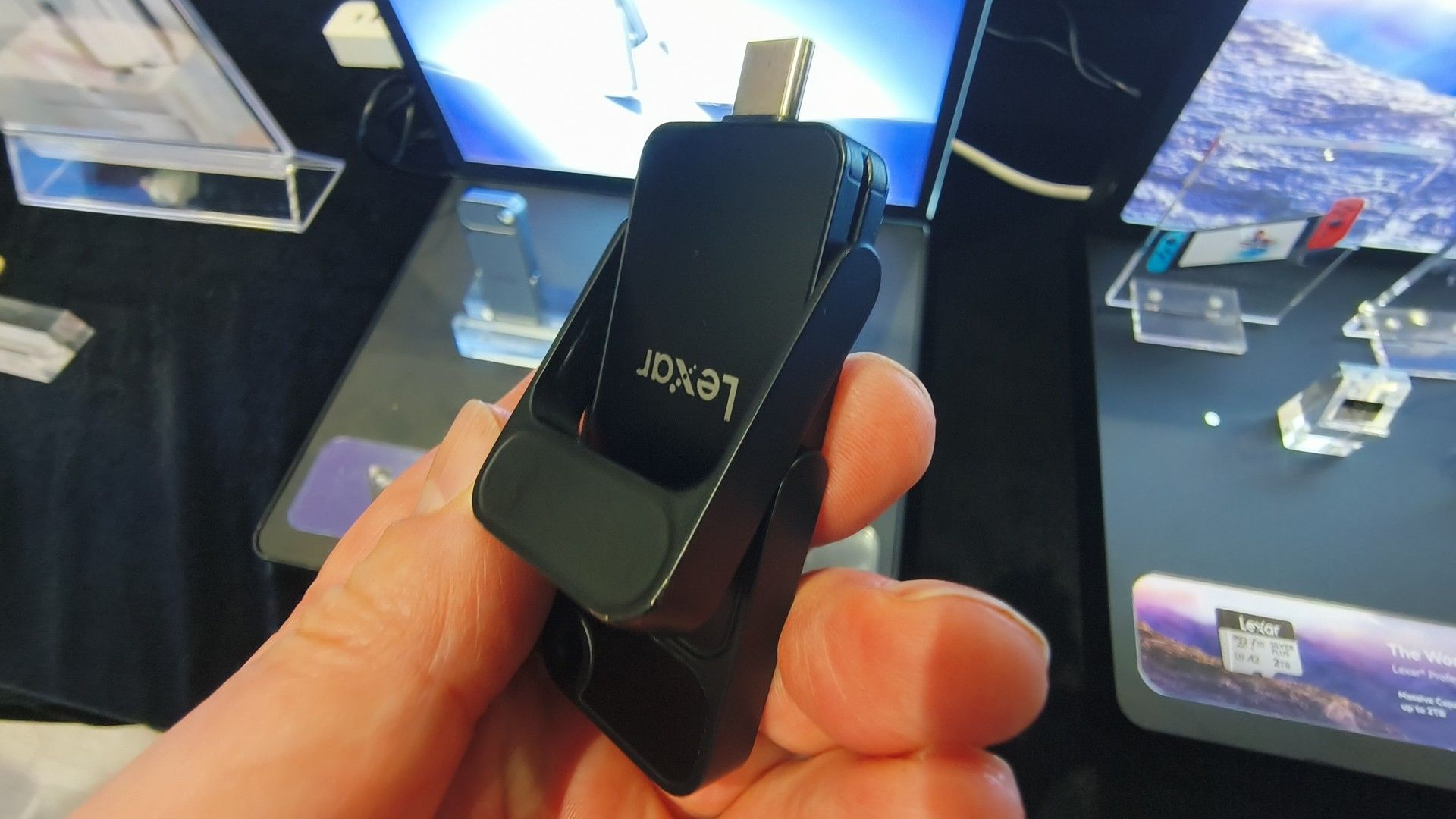
Leaving an SSD in a drawer and not powering it up for over a year can leave your files vulnerable (Image credit: Future) Copy link Email Share this article 0 Join the conversation Follow us Add us as a preferred source on Google Newsletter Subscribe to our newsletter Recently, I’ve written for Creative Bloq's sister site Digital Camera World about a run of photographic rediscoveries. For instance, F Holland Day’s 1898 series The Seven Words resurfaced in September. Then in October, we saw a newly found cache of photos that document the making of the 1926 horror film Faust. These antiquated forms of physical media sat untouched for a century or more, and yet remain totally viewable. Amazing, really.Now, let's do a thought experiment. If you're old enough, picture the digital work you made 20 years ago. That might be a website design, assets for a CD-ROM, a vector illustration… whatever.Ask yourself: could you locate and open those files today? If you’re anything like me, the honest answer is “mostly no”.Latest Videos FromCreative BloqWatch full video here: It's ironic, really. Because digital work has no tangible physical presence, we tend to think of it as eternal. In truth, though, it's kind of the opposite.Why your files are in dangerThis March, I visited memory card manufacturer Lexar’s facilities in Shenzhen, China. And one moment there has stuck with me ever since. I visited one of the world's most advanced memory card factories... yet even this high tech isn't foolproof (Image credit: Lexar)In a press conference, the company's representative explained that the flash memory used in consumer memory cards and SSDs can start losing data within a year if you leave them in a drawer and don't power them up.Lexar told me it’s developing a dedicated device to address this issue, but it's early days. In contrast, a print just sits there, being a print.Get the Creative Bloq NewsletterSign up to Creative Bloq's daily newsletter, which brings you the latest news and inspiration from the worlds of art, design and technology.Meanwhile, if you think putting your work online, there's more bad news. A Pew Research Center study found that 38% of webpages that existed in 2013 were no longer accessible a decade later. Platforms are no safer. Back in 2019, MySpace admitted that a server migration had wiped photos, videos and music uploaded between 2003 and 2015: an estimated 50 million songs from 14 million artists.Its advice to users was to keep their own backups. But wherever you back stuff up, basically, you're running the same risk. As the sudden closure of Sora highlighted, venture capitalists don't really care about protecting your stuff as much as you do.There's also the problem of actually opening files in years to come. Built something in Flash in 2012? I doubt you'll be able to salvage it now, after Adobe shuttered the format in 2020, and that's just one example among many.How to keep them safeSo what can we do? There are few basic rules we all should be following if we want to be able to access our work in 2030, 2040 and further ahead. The first is to follow the 3-2-1 rule. Keep three copies of anything important, on two different types of storage, with one stored offsite or in the cloud. It's not a foolproof method, but it does reduce the odds of losing stuff exponentially. Use multiple storage methods, not just one (Image credit: Future)Secondly, every few months or so, power up your SSDs and memory cards, so firmware can do its job. Thirdly, export your final files to open formats like TIFF, PNG, SVG or PDF/A, which are more likely to be readable in decades to come.Fourthly, treat platforms as shop windows, not storerooms. And finally, print your work. As long as you can avoid floods or fires, paper-based storage has a better track record than digital.Is this seems a bit of a faff, I'd have to agree. But consider this. If future historians end up knowing more about 1926 than 2026, it won’t be for lack of material. It’ll be because we couldn't be bothered to look after it – and what will future generations think of us then? TOPICS Tom May Freelance journalist and editor Tom May is an award-winning journalist specialising in art, design, photography and technology. He is the author of the books The 50 Greatest Designers (Arcturus) and Great TED Talks: Creativity (Pavilion). Tom was previously editor of Professional Photography magazine, associate editor at Creative Bloq, and deputy editor at net magazine. View More You must confirm your public display name before commenting Please logout and then login again, you will then be prompted to enter your display name. Logout LATEST ARTICLES 1 If smart glasses take off, I predict a new golden age for the billboard 2 From Pepsi Man to WendyQuest, why are brands making video games again? 3 "I’ve ignored most advice and learned by fire": 5 Questions with Christopher Glass 4 Are you team Apple or Samsung in the folding phone era? 5 This brilliant budget 3D printer is the one I'd buy if I were getting into the hobby