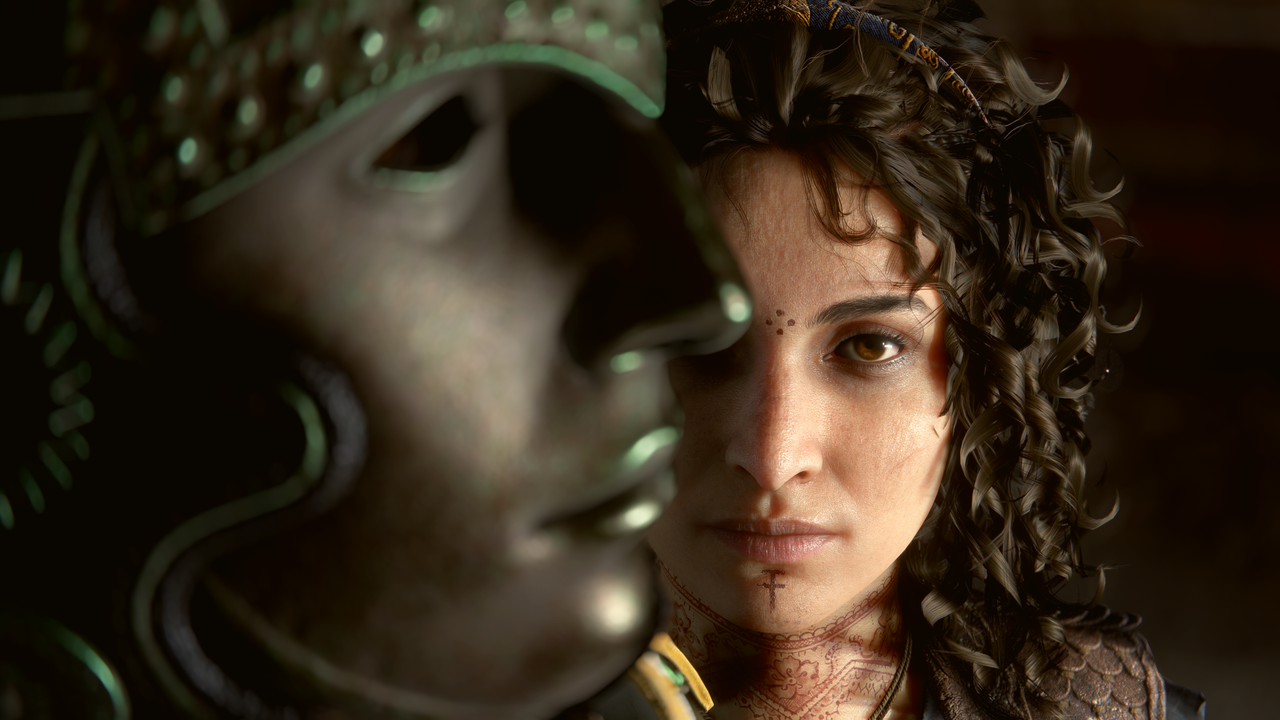
The surprising reason why Resonance: A Plague Tale Legacy’s ancient Greece is historically wrong
(Image credit: Asobo Studio / Focus Entertainment) Copy link Facebook X Whatsapp Pinterest Flipboard Email Share this article 0 Join the conversation Follow us Add us as a preferred source on Google Newsletter Subscribe to our newsletter Asobo Studio has always treated the world of A Plague Tale as…
Annons
Annons
(Image credit: Asobo Studio / Focus Entertainment) Copy link Facebook X Whatsapp Pinterest Flipboard Email Share this article 0 Join the conversation Follow us Add us as a preferred source on Google Newsletter Subscribe to our newsletter Asobo Studio has always treated the world of A Plague Tale as more than a backdrop for gaming shenanigans, using light, colour, architecture and atmosphere to put you inside the heads of its characters. With Resonance: A Plague Tale Legacy, that visual language moves from 14th-century France to the sun-soaked landscapes of Greece, while also reaching much further back into history, with the game’s Trials of Minos taking players between the 14th century and the Minoan Bronze Age.It’s a fascinating challenge for the art team to create believable, playable environments, particularly when so little of the Minoan world survives, and much of what we know comes from fragments, museum collections, and reconstructed sites. When discussing historical accuracy versus artistic interpretation, the New World team similarly talks about taking real-world inspiration and transforming it to fit a game's own visual identity.The result is a world that takes some historical liberties, the team had to actually wind in some of real history's excesses to make the game believable, “We had to tone down that historical reality”, says art director Olivier Cannone, but is packed with the kind of details that make a setting feel lived-in, from pottery and bronze artefacts to colourful architecture, weathered materials and ancient frescoes.Here, Asobo art director Olivier Cannone explains how the team evolved A Plague Tale’s distinctive visual identity, balanced historical research with artistic licence, and drew inspiration from everything from Gladiator and Troy to Assassin’s Creed Origins.Resonance: A Plague Tale Legacy releases 27 August 2026 for PlayStation 5, Xbox Series X/S, and PC. (Image credit: Asobo Studio / Focus Entertainment)Creative Bloq: How did you evolve A Plague Tale's visual style while keeping its identity intact?Olivier Cannone: In the A Plague Tale games, we made extensive use of contrast between light and darkness as part of our visual language, always trying to align it with both the characters’ emotions and the gameplay. We alternated between colourful, cheerful, sunlit environments that felt safer and darker, foggy, muddy, horror-inspired settings that created a greater sense of unease.Since a large part of the art team remained the same for Resonance, we wanted to preserve and reinforce this approach as much as possible. The colourful and sunny landscapes of Greece allowed us to push these contrasts even further. We also aimed to maintain the historical realism of our environments and architecture, at least as much as the game's setting and creative goals allowed.