Quote of the Day by James Gurney: "Working from imagination and from observation are indispensable to each other"
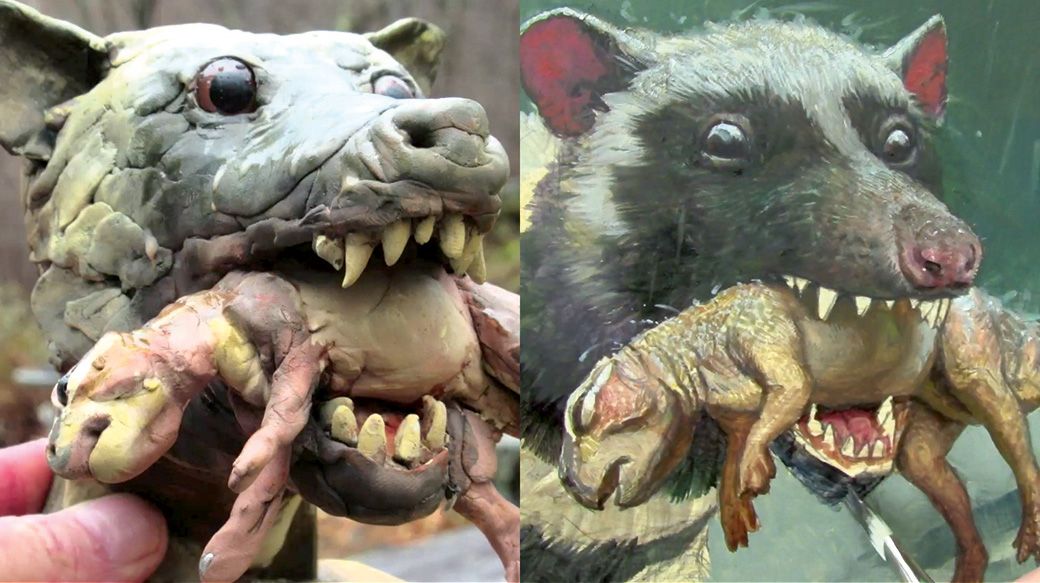
James Gurney paints fantasy creatures inspired by real life observation. (Image credit: James Gurney) Copy link Facebook X Whatsapp Pinterest Flipboard Email Share this article 0 Join the conversation Follow us Add us as a preferred source on Google Newsletter Subscribe to our newsletter Source:…
James Gurney paints fantasy creatures inspired by real life observation. (Image credit: James Gurney) Copy link Facebook X Whatsapp Pinterest Flipboard Email Share this article 0 Join the conversation Follow us Add us as a preferred source on Google Newsletter Subscribe to our newsletter Source: James Gurney interview with The Epoch Times, 2010, discussing Colour and Light and his approach to imaginative realism; Gurney also published the interview on his Gurney Journey blog.For an illustrator famous for inventing an entire world, James Gurney has a surprisingly strong attachment to reality; we saw that when he shared easy-to-learn art tips for turning the ordinary into the extraordinary.Working from imagination and from observation are indispensable to each otherJames GurneyGurney is best known for Dinotopia, his richly imagined series of paintings and books about a lost civilisation where humans and dinosaurs live side by side, but look closely and you start to see how much real-world observation holds all that invention together. Gurney studies things, properly studies them, and that habit feeds directly back into the worlds he creates.In an interview about his book Color and Light, Gurney explained that working from imagination and working from observation were “indispensable to each other”. He couldn't spend too long painting from imagination without going outside and looking at the real world again, but equally, he never wanted to become someone who only painted what was in front of him. James Gurney's studio is littered with creative tools, including models and marquetes he uses as reference. (Image credit: James Gurney)I feel like that advice is relevant to anyone making art now, when reference is everywhere, and it's incredibly easy to either lean on it too heavily or avoid it altogether because using reference can somehow feel like admitting you can't draw. Gurney's approach is more interesting than either extreme. The things you observe don't just give you something to copy later; they become part of the visual vocabulary you draw from when you're inventing something that doesn't exist.Once you start imagining things, you look at reality differently. You're no longer just looking at a tree; you're noticing the shapes you could exaggerate, how the branches might frame a composition, and the strange colour sitting underneath the green leaves. You start seeing possibilities in ordinary things because you're looking at them as an artist who wants to transform them. Learning to observe the world around you can turn a tree into a weird fantasy creature. (Image credit: James Gurney)With Gurney's approach, observation isn't simply the research stage before the real creative work begins, and imagination isn't something you switch on once you've finished studying. Each one changes what you get from the other. And that's why Dinotopia feels like a good example of the whole idea. It's an imaginary world full of things that never existed, yet its believability comes from Gurney having spent so much time looking at things that do.Get the Creative Bloq NewsletterSign up to Creative Bloq's daily newsletter, which brings you the latest news and inspiration from the worlds of art, design and technology.The more closely you look at reality, the more convincing your imagination can become – and, perhaps more importantly, the more interesting reality becomes when you look at it with the intention of changing it.Read James Gurney's blog, Gurney Journey, for more advice, insights and inspiration.Our favourite James Gurney art books: Andrews McMeel Publishing Color and Light: a Guide for the Realist Painter (volume 2) Andrews McMeel Publishing Imaginative Realism: How to Paint What Doesn't Exist (volume 1) Andrews McMeel Publishing The Artist's Guide to Sketching: the Classic Book About Making Art on Location Dover Publications Dinotopia, a Land Apart From Time: 20th Anniversary Edition 3DTotal Publishing Artists' Master Series: Color and Light Dover Publications Dinotopia, the World Beneath: 20th Anniversary Edition TOPICS Ian Dean Editor, Digital Arts & 3D Ian Dean is Editor, Digital Arts & 3D at Creative Bloq, and the former editor of many leading magazines. These titles included ImagineFX, 3D World and video game titles Play and Official PlayStation Magazine. Ian launched Xbox magazine X360 and edited PlayStation World. For Creative Bloq, Ian combines his experiences to bring the latest news on digital art, VFX and video games and tech, and in his spare time he doodles in Procreate, ArtRage, and Rebelle while finding time to play Xbox and PS5. View More You must confirm your public display name before commenting Please logout and then login again, you will then be prompted to enter your display name. Logout LATEST ARTICLES 1 New Balance sues rival athletics brand over shoe logo 2 Autodesk says AI should give artists time to experiment, not make them work twice as fast 3 Want Star-Lords' headphones? This modern version is only $30 4 BFI London Film Festival’s new identity is more hand crafted than meets the eye 5 Quote of the Day by Peter Max: "The Beatles captured the music mood of the late '60s and early '70s, I captured the visual."Source: Creative Bloq AI Art — Published — Category: Image AI